
The day before the NDS Public Conference 2026, the NDS developer community met in Gothenburg for the Public Technical Meeting: a full day on tools, AI agents, certification and the next generation of NDS.Live APIs, with plenty of room for hands-on work and discussion.
Public Technical Meeting at a glance:
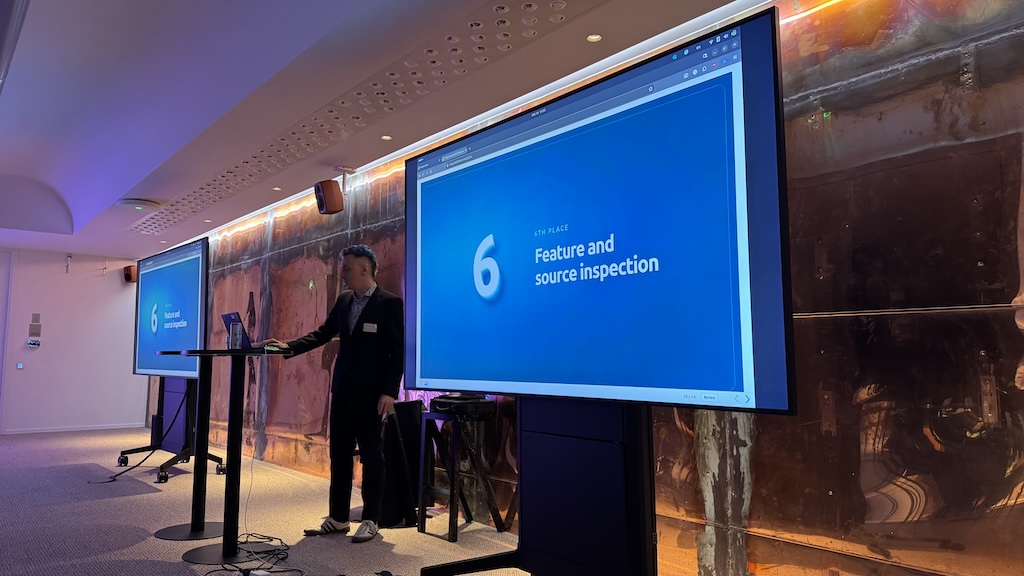
On 14 October, developers, product owners, and map experts gathered at Näst in Torslanda for the NDS Public Technical Meeting. Where the NDS Public Conference the following day looked at NDS.Live in practice and at the road ahead, the Technical Meeting went one level deeper: into the tools that NDS members and the developer community use every day, and into the ideas that will shape them next.
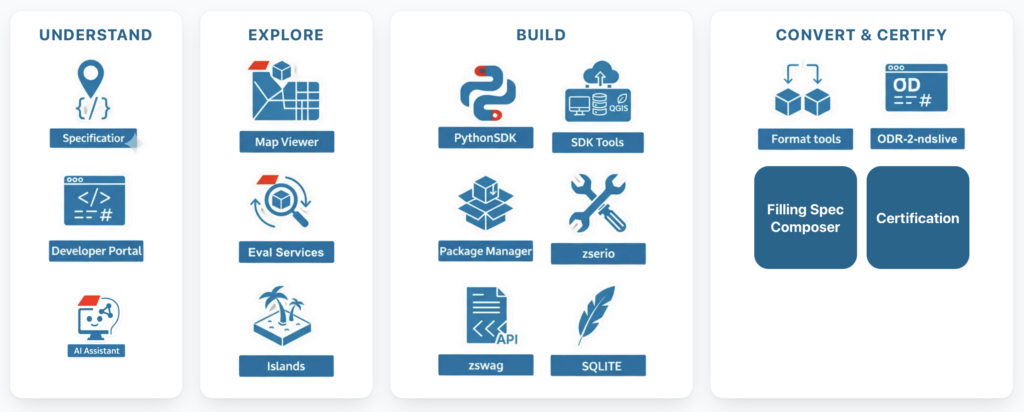
Fabian Klebert, Technical Lead of NDS, opened the day with an overview of the NDS tools and where they are heading. The toolbox now covers the whole path from understanding the standard to building and checking map data: the Developer Portal and the Specification MCP Server to understand the specification; the MapViewer, the Evaluation Map Services and the sample Islands to explore real data; the Python SDK, zserio, zswag and SQLite to build applications; and the GeoJSON and OpenDRIVE converters, the Filling Spec Composer and the certification tooling to exchange and check data.
Recent highlights include the Python SDK 0.12, which now also serves Smart Layer Object services; the Filling Spec Composer, born in a member task force and now an official NDS tool with version 2026.10.0; the GeoJSON Converter 2026.4 with richer NDS.Live topology and more NDS.Classic content; and the Specification MCP Server, now also hosted at mcp.nds.live. The foundations got faster and safer as well: a change to zserio now runs through continuous integration in about 20 minutes instead of about three hours, security fixes are published as GitHub advisories, and SBOM-based security tracking is starting with zserio, SQLite and the MapViewer later this year.
Joseph Birkner looked back on a busy MapViewer year. Between the conferences in Tokyo and Gothenburg, six releases shipped, shaped by a public roadmap, a user survey, 26 Tooling Community meetings and the Tooling Days in June.
Highlights include split-screen views and multiple inspection panels, a new renderer with a simple pip-based setup, 3D display meshes and satellite imagery, Search 2.0 with schema-aware completion and several concurrent searches, geometry-aware 3D navigation with drill-picking and, most recently, support for Smart Layer Object services and point clouds.
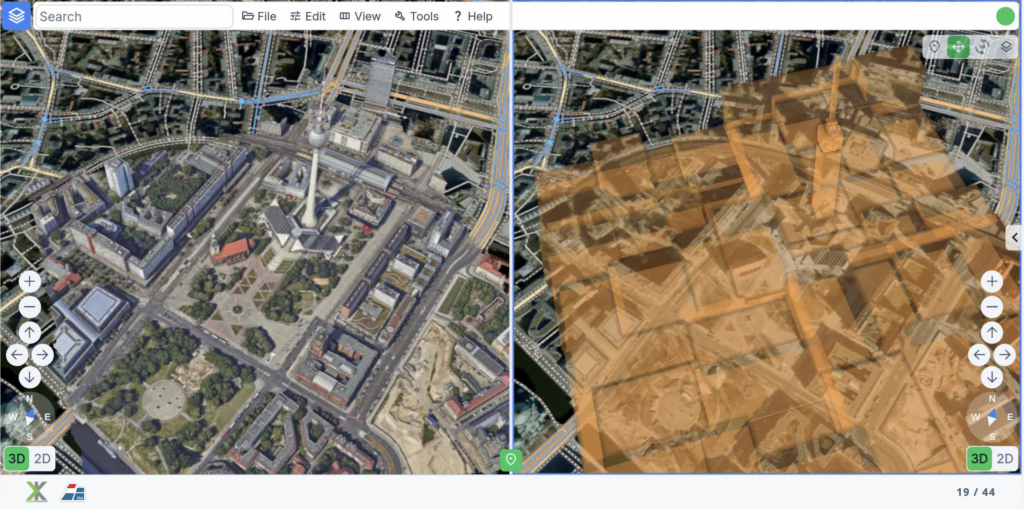
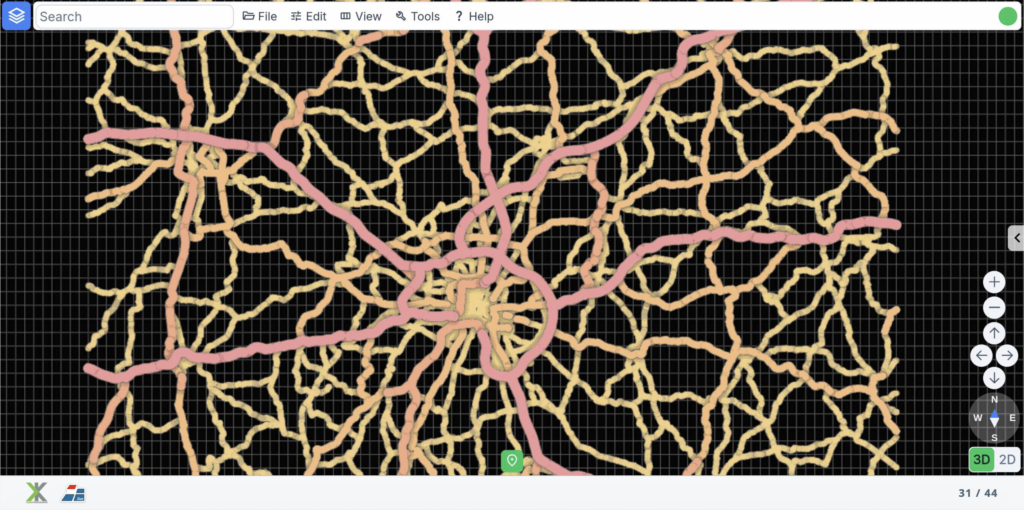
Performance came first in the team’s own top ten of 2026. In a side-by-side recording, loading the same 468 road tiles took 31 seconds with the current development version instead of 140 seconds with release 2025.6, and a speed-limit search with more than 320,000 matches completed in 14 seconds instead of more than two minutes.
Usage keeps growing too: since April, the MapViewer has been downloaded more than 25,000 times from PyPI. With the full adoption of AI-assisted development, the team resolved more tickets in 2026 so far than in 2023, 2024 and 2025 combined.
The roadmap for the rest of the year brings the foundation for AI agents in MapViewer 2026.5 at the end of October, followed by an embedded chat, measuring tools and version comparison, and support for the NDS.Live registry. Ideas for 2027, open for discussion, include desktop applications, integration with the certification tooling, spatial and graph-based searches, and support for further NDS.Live services such as routing and search.
After lunch, the “Talk to the Map” workshop put the newest capability straight into the participants’ hands: the MapViewer as an MCP server. Through 42 tools, an AI agent such as Codex, Claude Code or GitHub Copilot can discover the loaded maps, search and extract features, author styles, arrange views and inspect results, either in the viewer open in the browser or directly on the data.
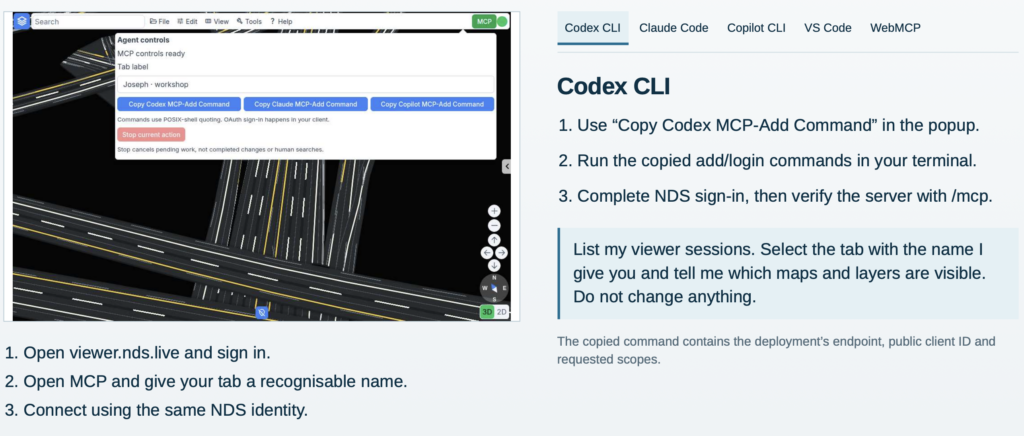
Participants connected their own agents to viewer.nds.live with their NDS sign-in and worked through a dozen experiments, from “Zoom to Munich, NDS.Live on the left, NDS.Classic on the right” and coloring roads by speed limit to finding roads without an explicit speed limit or comparing two maps. One message stood out: the Specification MCP Server supplies the definitions, the MapViewer supplies the actual map records. Together, agents can answer questions about both the standard and the data. The MCP capabilities ship to NDS members with MapViewer 2026.5 at the end of October.
The afternoon continued with the specification itself. The Developer Portal at developer.nds.live has gained attribute and rules overviews, release overviews and a better search. The Specification MCP Server gives AI agents normative access to the NDS.Live specification: they search it, look up types and rules, compare versions and check an answer against the specification before anyone sees it. NDS members can use it as a hosted service at mcp.nds.live or install it locally. The chat at chat.nds.live, now an agent built on the MCP server, is open to everyone with an evaluation account.
NDS.Live certification is moving into the production pipeline. Developed over the past year in a task force driven by the map makers, the new in-process approach lets the Certification Library validate and sign every Smart Layer inside the member’s own pipeline, tile by tile and in parallel. The signed certificate travels with the data and can be verified offline by any consumer: no central submission, no board on the normal path, and no expiry. Compared with the previous microservice approach, this speeds up the whole map production process by an order of magnitude. The new process takes effect once the NDS Steering Committee approves it in November; projects that already certify with the current approach can continue without a forced migration.
The last talk of the day looked further ahead. NDS.Live is built for efficient delivery and updates, with tiles, independently versioned layers and modules, and attribute maps. The price is paid by whoever asks a simple question: finding the speed limit of a single road takes a dozen steps through tiles, layers, attribute maps, validities and conditions.
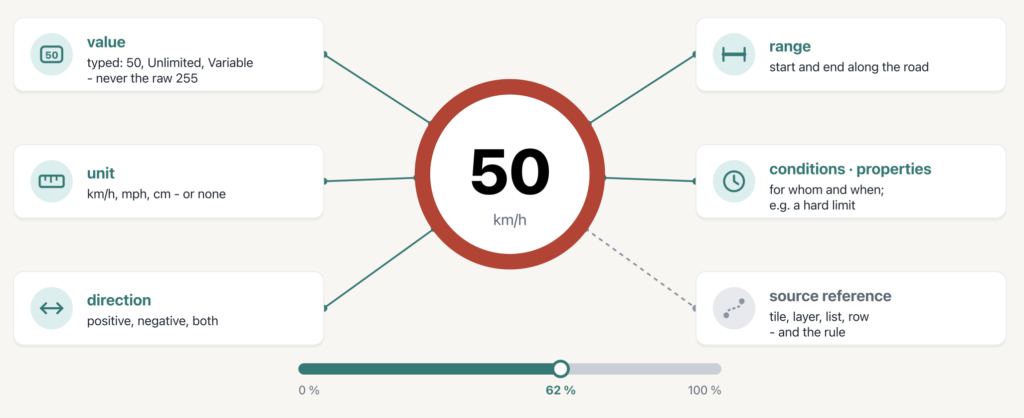
The proposed Higher-Level API turns this around. A normative, language-neutral logical model describes the features of the map, such as roads, intersections, lane groups and lanes, with their attributes and relations, independent of how and in which version they are stored. Typed APIs are generated from the same source, so that a program can simply ask for map.getRoad(id).getSpeedLimits() and receive every speed limit of the road with its unit, direction, range and conditions, each traceable to where it is stored. The design is in review, a C++ proof of concept is under way, and Python is to follow.
The talk led straight into the closing panel on the future of NDS specifications and tools. On the table were questions such as: which questions should the new API answer first, should the mapping from stored codes to meanings become annotations in the standard, and who owns the rules where the standard leaves a choice? The invitation to the community was clear: shape it with us.
Thank you to all participants and speakers, and to Volvo Cars for hosting us in Gothenburg.
Back to news →